



The Sunburn - What you need to know!
Everybody knows what sunburn is: it's a pain in the neck. But there's more to sunburn than meets the eye.
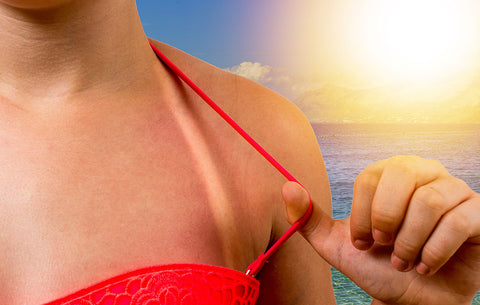
Sunburn is literally a flesh burn caused by the ultraviolet radiation of the sun. A sunburn is characterized by redness and is followed by pain, the severity depending on the duration and intensity of exposure. The condition occurs when the ultraviolet radiation one is exposed to exceeds the protective capacity of melanin in the skin.
With the exception of albinism, the human body has a limited natural protectant against ultraviolet radiation called melanin. (Albinism is a condition where the body has little or no melanin.) Melanin is a pigment produced in our cells. It determines our hair color, eye color, and skin color. It's this pigment that is designed to protect the skin by tanning it as a result of UV radiation. One produces a certain amount of melanin and that's all one gets-it's not a vitamin or mineral that can be supplemented. How much melanin one has can be generalized by skin-type. In general, the darker the skin the more melanin it contains, which makes it harder to burn. The following chart can help you determine where you fall in the spectrum of skin types (and sunburn/sun damage susceptibility).

Image Source: "palmfreesunwear.com/2015/10/21/know-your-skin-type-know-your-risk"
At best, one can depend on a base-tan (or melanin) for protection up to 4 SPF. Although this natural sun protection helps, it is wholly inadequate for any type of responsible protection against sunburn.
If you say "I see I am turning pink, I had a better cover-up" Beware! you are too late. You have already started a sunburn. Sunburns are sneaky because they continue to develop even after you apply sunscreen or get out of the sun. Sunburn pain is typically at its worse 6 to 48 hours after exposure and is sometimes followed by the flaking off of dead skin cells. This itchy, unsightly process is appropriately referred to as peeling and can continue for weeks.
Although sometimes a sunburn seems to disappear or to be converted into a tan, the damaging effects of this process remain etched at the cellular level. The UV radiation can cause DNA damage that can be passed onto subsequent generations of a cell's progeny. In other words, the damage is permanent-and not only permanent but cumulative.
Collected over a lifetime, skin damage can become skin cancer. The three most common forms of skin cancer are basal cell carcinoma, squamous cell carcinoma, and melanoma.
The good news is this: nobody is helpless against sunburn and skin cancer. Our chances hinge directly on our "personal history" with the sun. Research has found that the sun is responsible for over 90% of all skin cancers and the symptoms of premature aging ... and, certainly, it is responsible for every case of sunburn. But the sun is only responsible for passively. In reality, each one of us is directly accountable for the fate of our skin today, tomorrow, and ten years from now. Be responsible. Be proactive: wear sunscreen (we recommend at least SPF 30, optimally SPF 50 and don't forget to reapply), sun protective clothing, limit your time when the UV Index is low.
Note: UVB is the primary radiation responsible for sunburns. It is the most intense between the hours of 10:00 am and 2:00 pm. It is also more intense in the summer months.
What if you are the "unlucky" recipient of a sunburn?
Infants
According to the American Academy of Pediatrics if your baby gets a sunburn and is under 1 year of age, contact your pediatrician at once - a severe sunburn is an emergency. For babies over the age of 1 year, tell your pediatrician if there is blistering, pain or fever.
Children and Adults

There is no quick cure for minor sunburn. Symptomatic treatment can be initiated with aspirin, acetaminophen, or ibuprofen to relieve pain and headache and reduce fever. (Children and teenagers should generally not be given aspirin because of the danger of Reye syndrome.) Drinking plenty of water helps to replace fluid losses. Cool baths or the gentle application of cool wet cloths on the burned area may also provide some comfort. You should avoid further exposure until the burn has resolved. Additional symptomatic relief can be achieved through the application of a topical moisturizing cream, aloe, or 1% hydrocortisone cream. A low-dose (0.5%-1%) hydrocortisone cream, which is sold over the counter, can be helpful in reducing the burning sensation and swelling and speeding up healing (2).
If blistering occurs, lightly bandage or cover the area with gauze to prevent infection. The blisters should not be broken, as this will slow the healing process and increase the risk of infection. When the blisters break and the skin peels, dried fragments may be removed and an antiseptic ointment or hydrocortisone cream may be applied.
Indications for medical attention
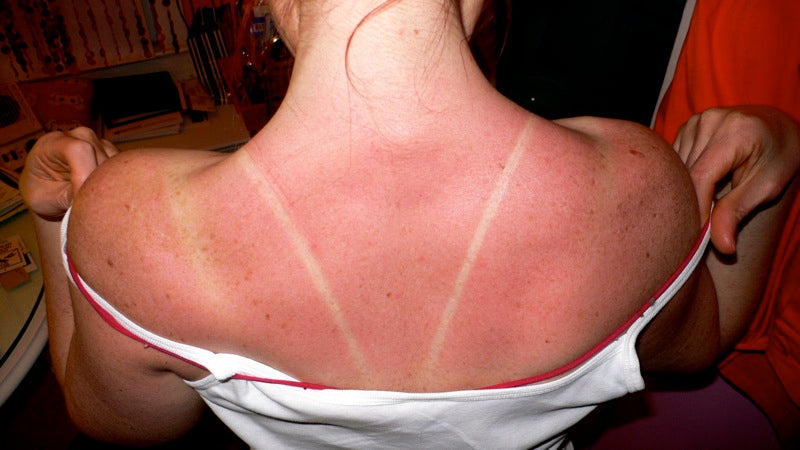
This includes severe sunburns covering more than 15% of the body, dehydration, high fever (>101 F), or extreme pain that persists for longer than 48 hours.
References:
- Center for Disease Control and Prevention Click Here
- A randomized, controlled study of the safety and efficacy of topical corticosteroid treatments of sunburn in healthy volunteers Click Here
This material is provided for information only. It is not a substitute for your doctor or health care provider. If you have any health questions or concerns you should see your doctor or health care provider.


Leave a comment